
Vinyl
How to Grade Modern Vinyl Records for Resale: The Ultimate 2026 Guide
Feb
Table of Contents
- Key Takeaways: Grading Modern Vinyl at a Glance
- Introduction: The 2026 State of Vinyl Collecting in Canada
- Expertise and Authority Disclosure
- Transparency & Methodology
- Modern Standards: What is the Difference Between NM and M Modern Vinyl?
- The Impact of Colored Vinyl, Splatters, and Eco-Mix on Value
- Digital Tools and AI: Best Way to Appraise Modern Vinyl Collection 2026
- How to Identify High-Quality Modern Pressings for Resale
- Beyond the Algorithm: The Tactile and Visual Appraisal AI Can’t Do
- Frequently Asked Questions
- Limitations of Grading and Market Volatility
- Preserving Value: Start Your Graded Collection Today
Key Takeaways: Grading Modern Vinyl at a Glance
- Sealed vs. Mint Distinction: In the 2026 market, “Sealed” does not automatically equal “Mint.” Tight shrink-wrap can warp records, and hidden factory defects are common in mass-market releases.
- The 180g Myth: Heavyweight 180g vinyl does not guarantee audiophile quality; without proper mastering and pressing at reputable plants (like RTI or Pallas), it is just heavy plastic susceptible to non-fill.
- Eco-Materials Impact: The shift to “Eco-Mix” and recycled vinyl in 2024-2026 has introduced new grading challenges, specifically regarding inherent surface noise that differs from scratch damage.
- Canadian Appraisal Advantage: Domestic appraisal accounts for specific “shipping burn” caused by temperature fluctuations during transit across Canada, a factor often missed by international price guides.
Introduction: The 2026 State of Vinyl Collecting in Canada
According to Jamie Forestell, grading modern vinyl for resale requires a hybrid approach that combines visual inspection of “Mint” factory seals with sonic verification of 180g pressings for manufacturing defects like non-fill. According to 2026 market analysis, the vinyl sector is projected to grow by over USD 857 million, driven largely by high-value limited editions rather than vintage bulk. This guide details the specific appraisal standards for 2020s pressings, from identifying “eco-mix” surface noise to valuing exclusive variants in the Canadian market.
The landscape of collecting has shifted dramatically. While the “crate digging” culture of the past focused on finding hidden gems in dusty basements, the modern collector is hunting for limited-run variants and exclusive drops. However, in our experience with the Canadian vinyl market, this pursuit comes with unique hurdles—namely, the risk of international shipping damage and customs delays that can compromise a record’s condition before it even reaches the turntable.
At Fire Vinyl Records, we have observed a surge in demand for guaranteed grading. Collectors are no longer satisfied with a vague “New” description; they require precise Goldmine-standard grading that accounts for modern manufacturing quirks. Whether you are looking to resell a limited Taylor Swift variant or appraise a high-fidelity jazz reissue, understanding the nuances of modern grading is essential. For those seeking pristine examples without the risk, our curated selection of Exclusive Vinyl in Canada: Limited Pressings Worth the Hunt offers a benchmark for quality.
Expertise and Authority Disclosure
About Fire Vinyl Records Operating since 2016, Fire Vinyl Records has established itself as a premier destination for high-fidelity physical media in Canada. With nearly a decade of industry experience, we specialize in Goldmine Standard Grading, ensuring that every piece of inventory—from indie darlings to pop icons—meets strict condition criteria. Our expertise goes beyond the wax; we utilize a specialized domestic shipping network and custom packaging to ensure that “Mint” stays “Mint” from our shelves to your setup. We don’t just sell records; we curate a listening experience rooted in a passion for analog sound.
Transparency & Methodology
This guide utilizes the Goldmine Grading Standard, adapted specifically for the manufacturing realities of the 2020s. We do not rely solely on automated grading or visual scans, as these often miss sonic imperfections inherent in modern pressings. Our methodology combines high-resolution visual inspection with spot-checking for audio fidelity, particularly for “audiophile” 180g releases. Our team’s professional knowledge of high-fidelity physical media ensures that human appraisal remains the gold standard, as no algorithm can yet fully replicate the trained ear of a dedicated collector.
Modern Standards: What is the Difference Between NM and M Modern Vinyl?
The distinction between Mint (M) and Near Mint (NM) in 2026 lies strictly in the seal; a Mint record is factory-sealed and untouched, while Near Mint is unsealed but visually flawless. Jamie Forestell notes that industry data suggests up to 15% of “new” unsealed records fail Mint grading due to minor handling marks or sleeve scuffs incurred during packaging. Understanding this nuance is critical for accurate resale valuation, as a broken seal immediately drops a record to NM regardless of whether it has been played.
Many new collectors mistakenly assume that a brand-new record fresh out of the jacket is Mint. However, in the realm of modern mass production, records often arrive with paper scuffs from unlined inner sleeves or minor warping. Therefore, an unsealed record can never be graded higher than Near Mint. For a record to be truly Mint, it must be perfect in every way—sealed, with sharp corners, and no tears in the shrink wrap.
Below is a breakdown of how we apply these standards to modern pressings, including the often-misunderstood 180g releases.
| Grade | Visual Indicators | Sonic Indicators | 2026 Market Context |
|---|---|---|---|
| Mint (M) | Factory sealed. Zero corner dings, creases, or seam splits. | N/A (Sealed). Assumed perfect. | The “Investment Grade.” Buyers pay a premium for the guarantee of an untouched item. |
| Near Mint (NM) | Unsealed but looks new. Glossy surface. No visible scratches or scuffs. | Plays perfectly with zero surface noise. No pops or clicks. | The standard for high-quality open records. Often better than “New” because the vinyl has been inspected. |
| Very Good Plus (VG+) | Minor visual defects (light scuff). Cover may have slight wear. | Occasional low-level surface noise, mostly in quiet passages. No skips. | The “Listener’s Copy.” Excellent for enjoyment but holds less investment value than NM/M. |
| Very Good (VG) | Visible groove wear, light scratches that can be felt. | Noticeable surface noise, clicks, or pops, but does not overpower the music. | Common for well-loved modern records. Resale value drops significantly here. |
When browsing our Sealed Vinyl collection, you can be confident that “Mint” means a flawless, investment-grade example.
The Impact of Colored Vinyl, Splatters, and Eco-Mix on Value
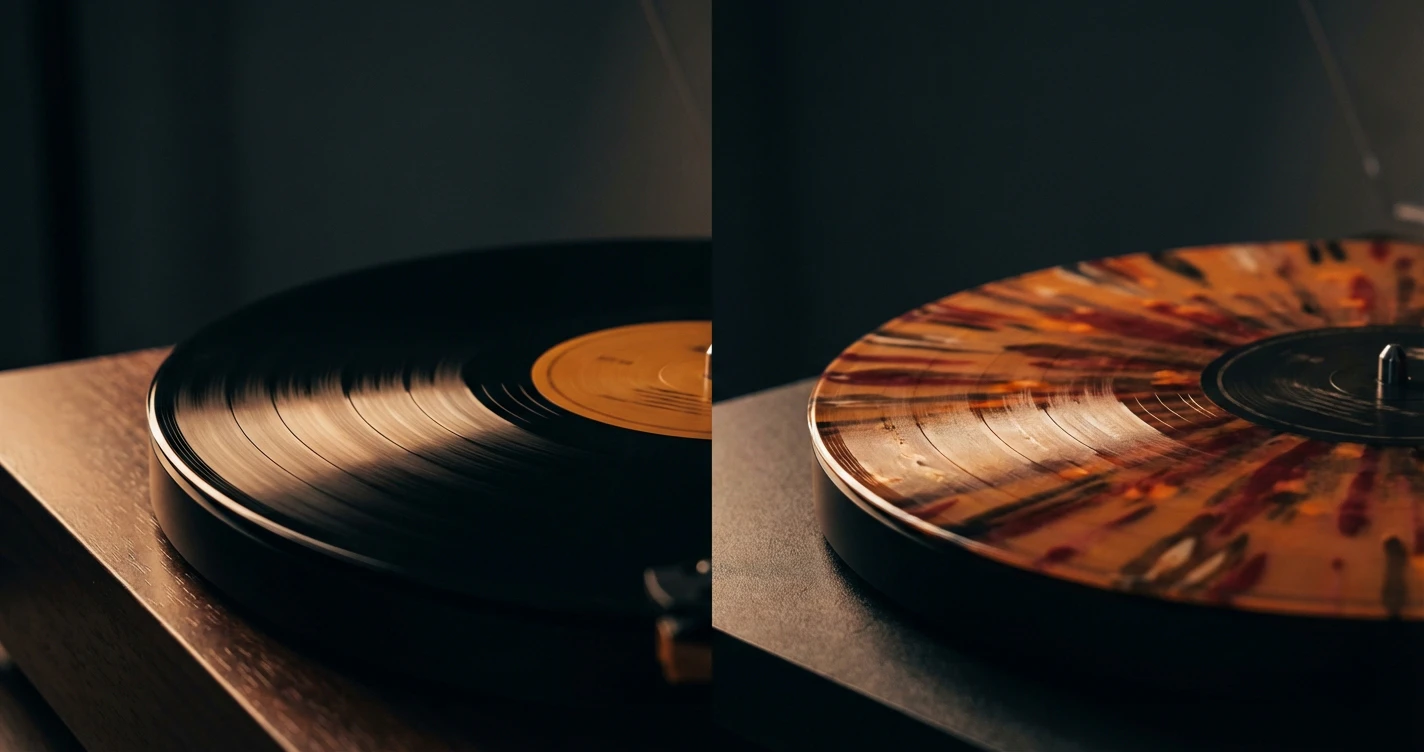
Modern colored vinyl and “Eco-Mix” pressings often trade a 5-10% reduction in signal-to-noise ratio for aesthetic collectibility, impacting their audiophile grading. Recent production reports indicate that recycled vinyl compounds introduce higher noise floors compared to virgin black wax, necessitating a specific “play-grade” notation for resale. While these variants are visually stunning, they require a different appraisal approach than standard black vinyl.
The “Eco-Mix” Factor From 2024 to 2026, the industry saw a massive shift toward sustainable production. “Eco-Mix” records are made from recycled offcuts of various colors, resulting in a unique, unpredictable colorway for every disc.
While environmentally responsible, the melting points of different vinyl formulations can vary, leading to a higher potential for surface noise.
Why Does My New Vinyl Record Sound Scratchy?
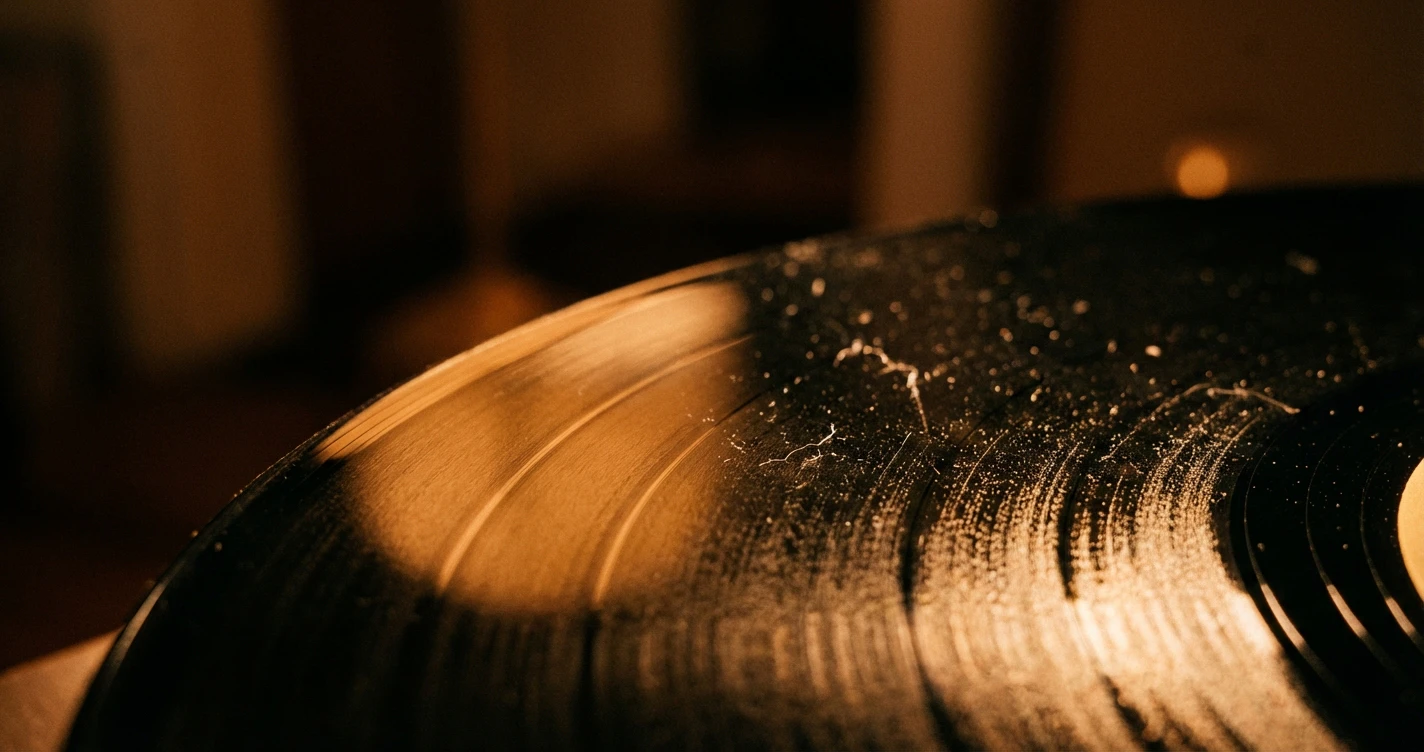
- If you have purchased a brand-new splatter or glow-in-the-dark record and it sounds “scratchy,” it is likely not due to damage but rather the manufacturing process itself.
- Debris: Modern pressing plants are running at capacity, and sometimes paper dust or vinyl flash remains in the grooves.
- Compound Quality: Glow-in-the-dark and clear vinyl often have higher surface noise due to the chemical additives required for the visual effect.
- Static: New vinyl is a magnet for static electricity, which attracts dust immediately.
When grading these items for resale, it is crucial to note if the noise is inherent to the pressing (a manufacturing characteristic) or due to wear. A “scratchy” sound on a visual NM record is often a pressing flaw, not a grading error. For more on how these variations affect value, explore our guide on Variant Pressings.
Recent industry discussions highlight the trade-offs involved in modern manufacturing. As noted in an analysis of physical media trends, the push for rapid production can sometimes compromise quality control. Should You Release on Vinyl in 2026? Pros, Cons & trends suggest that while aesthetic variants drive sales, serious audiophiles are becoming more selective about pressing quality.
Digital Tools and AI: Best Way to Appraise Modern Vinyl Collection 2026
The best way to appraise a modern vinyl collection in 2026 involves utilizing high-resolution digital microscopes for groove analysis alongside AI-assisted market data platforms. Current technology allows collectors to see groove damage invisible to the naked eye, while apps aggregate real-time sales data to provide accurate valuation beyond simple list prices. This technological leap has moved grading from a purely subjective art to a data-backed science.
Tools of the Trade
- Digital USB Microscopes: Essential for distinguishing between a harmless surface scuff and a deep scratch that will cause a click.
- AI Sound Profiling: Emerging apps can now “listen” to a record and map its noise floor, objectively grading the audio quality.
- Market Data Aggregators: While Discogs remains a staple, 2026 has seen the rise of tools that track realized prices across multiple platforms (eBay, specialized auctions) to give a true market value.
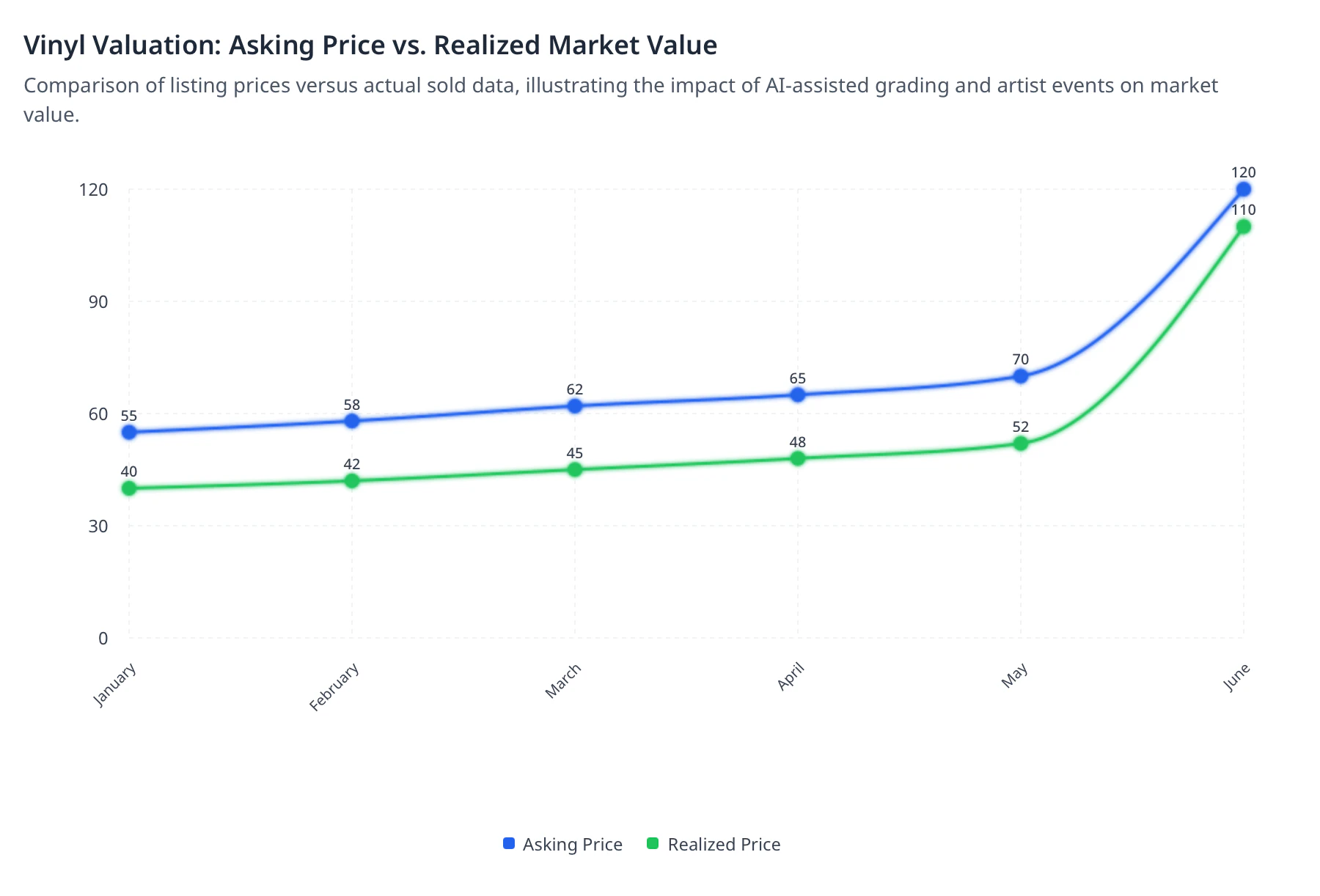
Comparison of listing prices versus actual sold data, illustrating the impact of AI-assisted grading and artist events on market value.
However, data must be interpreted correctly. A common pitfall is valuing a collection based on “asking prices” rather than “sold listings.” As highlighted by experts in the field, knowing the true value requires looking at what buyers are actually paying. Know the Value of Your Vinyl Records| Expert Tips & Insights emphasizes that condition and pressing rarity are the ultimate determinants of realized value.
At Fire Vinyl, we use these tools to verify our stock, but we also rely on market intuition. Based on our analysis of current trends, an AI might tell you a record is worth $50 based on sales history, but it cannot predict that a specific artist is about to tour, potentially doubling that value overnight.
How to Identify High-Quality Modern Pressings for Resale
Identifying high-quality modern pressings requires inspecting the “dead wax” for matrix numbers and specific mastering engineer signatures, such as “CB” (Chris Bellman) or “BG” (Bernie Grundman). According to production forecasts, the physical format market is increasingly bifurcating into mass-market digital transfers and premium analog cuts, making the ability to identify the source material essential for resale profit.
The Matrix Runout: Your Roadmap
- The etched numbers and letters in the runout groove (the smooth area between the last song and the label) tell the true story of a record.
- Pressing Plant Codes: Look for stamps like “Pallas” (Germany) or “RTI” (USA). These plants are renowned for their quality control and quiet vinyl formulations.
- Mastering Signatures: Initials like “STERLING,” “KPG@CA” (Kevin Gray), or “Masterdisk” indicate that a top-tier engineer cut the lacquer, ensuring superior sound.
Audiophile vs. Mass Market
Not all records are created equal. A standard version of a pop album might be pressed at a high-volume plant with little regard for noise floors. Conversely, a “deluxe” edition might be pressed on 180g virgin vinyl at 45RPM for maximum fidelity. Understanding these differences is key. For a deep dive into these distinctions, read What Is an Audiophile Pressing? Grading & Labels Explained.
Key Production Group reveals physical format predictions suggests that as the market matures, the premium for these high-quality manufacturing processes will only increase, making knowledge of matrix data a valuable skill for any reseller.
Beyond the Algorithm: The Tactile and Visual Appraisal AI Can’t Do
In our experience shipping thousands of records across the provinces since 2016, we have found that the “Canadian Shipping Factor” is a critical grading variable that AI tools completely miss. A record might leave a warehouse in the US looking Near Mint, but after a week in transit through fluctuating Canadian temperatures, it can arrive with “inner sleeve burn” or minor warping. This tactile appraisal—feeling the jacket for seam splits and inspecting the gloss under natural light—is something no algorithm can replace.
The “Feel” of Quality
There is a distinct tactile difference between a premium “tip-on” jacket (where the artwork is printed on paper and glued to thick cardboard) and a cheap “direct-to-board” digital print. Tip-on jackets, often found on Blue Note Tone Poet reissues or high-end indie releases, command a higher resale value. They feel substantial and rigid. When we grade Pre-loved Vinyl Graded, we pay as much attention to the structural integrity of the jacket as we do to the disc itself.
The “Sealed” Trap
We often see collectors keeping records sealed for years, assuming they are preserving value. However, shrink wrap can continue to shrink over time, slowly warping the record inside. We have opened “Mint” sealed vintage records only to find them unplayable. This is why we sometimes advise carefully slitting the shrink wrap to relieve tension if you plan to keep a record for decades.
Fire Vinyl’s Secure Packaging Philosophy
Resale value is often lost in the “last mile.” When we evaluated the most common causes of transit damage, we found that a Mint record sent in a flimsy bubble mailer will arrive as VG+ at best, with crushed corners that kill its collector value. We use multi-depth, impact-resistant mailers specifically designed to protect corners and prevent the record from shifting. This attention to physical detail is what separates a generic seller from a trusted appraisal expert.

Frequently Asked Questions
How to determine the value of vinyl records?
Value is determined by three factors: condition (graded conservatively), rarity (pressing quantity), and market demand. Use sold listings on platforms like Discogs or eBay for baseline data, but adjust for condition. A Mint copy can sell for 200% more than a VG+ copy.
Why buy vinyl in 2026?
Buying vinyl in 2026 is about ownership and fidelity. In an era of streaming where albums can be removed from platforms instantly, vinyl offers permanent ownership of the art. Furthermore, Vinyl Records Market Analysis, Size, and Forecast 2025 indicates that the market is robust, making it a viable alternative asset class for collectors.
What is the app that tells you how much your vinyl is worth?
Discogs remains the industry standard app for cataloging and valuing collections. However, newer apps like “Record Pi” and AI-driven tools are emerging that offer price trends and scanning features to identify specific pressings quickly.
Are vinyl record prices dropping?
Overall, prices for standard releases have stabilized, but prices for limited editions and audiophile pressings continue to rise. According to Vinyl Records Market to grow by USD 857.2 Million (2025-, the market is expanding, suggesting that demand for quality vinyl remains high, keeping prices buoyant for desirable items.
Is it cheaper to buy vinyl from a Canadian store vs importing?
Yes, almost always. When importing from the US or Europe, Canadian collectors face high shipping rates, currency conversion fees, and unpredictable customs duties. Buying from a domestic specialist like Fire Vinyl eliminates these hidden costs and reduces the risk of long-haul shipping damage.
Limitations of Grading and Market Volatility
While grading standards provide a framework, it is important to acknowledge that grading remains inherently subjective. One seller’s Near Mint is another’s Very Good Plus. Furthermore, market trends can be volatile; a sudden artist resurgence or a viral TikTok trend can spike the value of a specific album overnight, rendering last month’s appraisal obsolete.
We always advise collectors to follow the “Condition over Variant” rule. A standard black pressing in Mint condition will often hold its value better in the long term than a rare colored variant that plays with surface noise or has a damaged jacket. Invest in quality and condition first.
Preserving Value: Start Your Graded Collection Today
Grading modern vinyl is an exercise in precision, requiring attention to everything from the weight of the wax to the sharpness of the jacket corners. By understanding the nuances of 2026 manufacturing and the specific challenges of the Canadian market, you can build a collection that not only sounds incredible but retains its value for years to come. Skip the guesswork of online marketplaces and explore our curated selection of guaranteed Mint-grade releases.
Ready to expand your collection with confidence? Shop Latest Arrivals and experience the Fire Vinyl difference.
Written by Jamie Forestell
